Sea spurge, euphorbia paralias, is one of Australia’s worst coastal weeds. In less than a hundred years it has spread from seed in ship’s ballast in Albany, invading and taking over the dune and beach systems along the entire coastline from Geraldton, in Western Australia to Sydney in New South Wales.
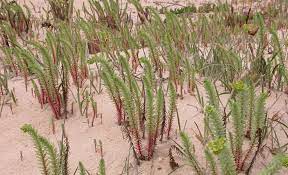
At the end of 2021, almost the entire population of sea spurge was removed from the Bay. Removing any remaining plants is valuable action. Viable seed still remains in the sand, and seeds deposited on beaches from ocean currents will germinate after rains. CSIRO will soon release a fungus, which targets sea spurge. The release of this fungus will greatly assist in any effort to remove the remaining plants from within and outside the Bay.
Guidelines to remove sea spurge
Sea spurge is very easy to pull up by hand, but first, make sure you have correctly identified the weed. Endeavour to remove the entire taproot. Grasping the roots as low as possible generally results in the whole taproot being removed. Larger plants can be a bit tough. If you are not able to pull up the whole root, then removing and disposing of seed heads prevents a seeding episode and is an extremely valuable action. Any plants not completely removed may still die but may reshoot and become detectable to the next weed warrior.
Plants with seed heads or just the seed heads themselves must be disposed of. Plants, which are not flowering, may be left on the beach to decompose. Whenever visiting the beach it is a good practice to have a compostable bag handy to contain seeding plants or seed heads. Sea spurge is safely disposed of in the green bins as the seed will not take hold away from the coast.
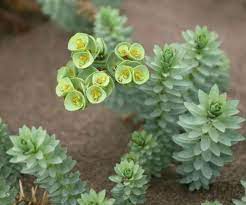
Warning: The broken stems of sea spurge ooze a toxic milky sap. which may irritate the skin and is painful if brought into contact with the eyes. Please follow these guidelines for your own health and safety:
- Wear gloves
- Wear long sleeves (avoid wiping face with sleeves)
- Wear protective eye glasses
- Wash your hands after handling sea spurge
Fantastic paper on sea spurge giving hope to successful control. Major learning: 99 percent of seeds germinate within two years, so removing seeding plants is critical very worthwhile and can lead to successful local eradication.
https://library.ndsu.edu/ir/bitstream/handle/10365/4720/farm_40_05_01.pdf?sequence=1&isAllowed=y